

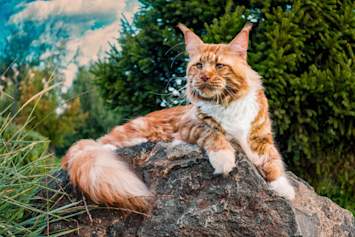
Looking for a feline friend with a little extra oomph? Whether it’s extra fluff, extra height, or extra personality you’re looking for, these large cat breeds have it all.
All About Big Cat Breeds from Around the World
Big cat breeds come from all over the world, from the snowy forests of Siberia and Norway to the mountains of Türkiye and the deserts of the American Southwest. Some are ancient natural breeds that evolved over centuries, while others were carefully developed by breeders to emphasize a particular look or personality.
Not every large cat is a pedigreed breed, some of the best cat breeds are a mix of who-knows-what. Domestic Long Hair Cats and Domestic Shorthair Cats can grow larger than average and make wonderful companions.
If you’re already sharing your home with others, you’ll be glad to know that many of these big cats also make great family pets and are excellent canine companions.
Although these cats vary in size, coat, and temperament, they all have one thing in common: they’re larger than the average house cat.
Savannah
Adult weight: 12–25 lbs.
Height: Up to 17”
Lifespan: 12–20 years.
Coat type: Short-haired with a bold spotted coat.
Origin story: First developed in the 1980s by accidentally crossing a domestic cat with an African serval, creating a breed that looks like a wild cat, but acts like a house cat.
Good with kids: ★★★★☆ Usually. Their intelligence and boundless energy make them a better match for active families with older children.
Good with dogs: ★★★★★ Excellent. Their intelligence, curiosity, and love of interactive play have earned Savannahs a reputation as one of the most dog-like cat breeds.
Fun fact: Savannah cats can jump up to 8 feet in the air from a standing position.
Maine Coon
Adult weight: 9–18+ lbs.
Height: Up to 16”
Lifespan: 10–15 years.
Coat type: Long-haired with a shaggy, water-resistant coat and tufted paws perfect for snowy winters.
Origin story: One of the oldest natural cat breeds in North America, the Maine Coon developed in the rugged climate of Maine.
Good with kids: ★★★★★ Excellent.
Good with dogs: ★★★★★ Excellent.
Fun fact: Early settlers believed the Maine Coon was part raccoon because of its bushy tail and shaggy coat, but modern genetics has proven that’s impossible.
Ragamuffin
Adult weight: 10–20 lbs. Males are often noticeably larger than females.
Height: 10–15”
Lifespan: 12–16 years.
Coat type: Semi-longhaired with a soft, plush coat that’s often compared to rabbit fur.
Origin story: The Ragamuffin was born in the 1990s from a split among Ragdoll breeders, who wanted to expand the breed’s colors and patterns while keeping its sweet personality.
Good with kids: ★★★★★ Excellent.
Good with dogs: ★★★★★ Excellent.
Fun fact: Ragamuffins often greet their owners at the door and follow them from room to room.
Norwegian Forest Cat
Adult weight: 12–16 lbs.
Height: 9–12”
Lifespan: 13–20 years.
Coat type: Long-haired with a dense, water-resistant double coat that protects against harsh Scandinavian winters.
Origin story: This natural breed evolved in the forests of Norway, where generations of natural selection produced a sturdy, agile cat built for climbing and surviving cold weather.
Good with kids: ★★★★★ Excellent.
Good with dogs: ★★★★★ Excellent.
Fun fact: In Norse mythology, giant forest cats were said to pull the chariot of the goddess Freyja. It’s said that the Norwegian Forest Cat inspired those legends.
Siberian
Adult weight: 8–17 lbs.
Height: 9–11”
Lifespan: 11–18 years.
Coat type: Semi-longhaired with a thick triple coat.
Origin story: The Siberian developed over centuries in the country’s cold forests, where its muscular build and dense coat helped it survive harsh winters.
Good with kids: ★★★★★ Excellent.
Good with dogs: ★★★★★ Excellent.
Fun fact: Some people with cat allergies report fewer symptoms around Siberians because certain cats produce lower levels of the Fel d 1 protein.
Ragdoll
Adult weight: 10–20 lbs.
Height: 9–11”
Lifespan: 13–18 years.
Coat type: Semi-longhaired with a silky coat that’s less prone to matting than many other long-haired breeds.
Origin story: It started with a white, long-haired cat named Josephine, whose unusually relaxed kittens inspired breeder Ann Baker to develop an entirely new breed.
Good with kids: ★★★★★ Excellent.
Good with dogs: ★★★★★ Excellent.
Fun fact: Ragdolls got their name because many go limp and relaxed when picked up, much like a child’s rag doll.
Bengal
Adult weight: 8–15 lbs.
Height: 8–10”
Lifespan: 12–16 years.
Coat type: Short-haired with distinctive spots or marbled patterns that resemble a wild leopard.
Origin story: Developed by crossing domestic cats with the Asian leopard cat to create a breed with an exotic appearance and a friendly, domestic temperament.
Good with kids: ★★★★☆ Usually. Their endless energy can be a bit much for young children.
Good with dogs: ★★★★☆ Usually. They can be overwhelming for more laid-back dogs.
Fun fact: Many Bengals have a natural “glitter” gene that gives their coat a shimmering, almost iridescent appearance in the sunlight.
British Shorthair
Adult weight: 7–17 lbs.
Height: 12–14”
Lifespan: 12–20 years.
Coat type: Short-haired with a dense, plush coat that gives British Shorthair cats their signature teddy bear appearance.
Origin story: When the Romans invaded Britain, they likely brought cats to protect their food stores from rodents.
Good with kids: ★★★★★ Excellent.
Good with dogs: ★★★★☆ Usually. Their calm, laid-back personality makes them a better match for relaxed dogs.
Fun fact: The Cheshire Cat from Alice’s Adventures in Wonderland is widely believed to have been inspired by the British Shorthair’s famously round face and broad smile.
Turkish Van
Adult weight: 10–20 lbs.
Height: 10–14”
Lifespan: 12–17 years.
Coat type: Semi-longhaired with a soft coat that naturally resists matting.
Origin story: This ancient breed developed near Lake Van in eastern Turkey, where it survived for centuries in a rugged, mountainous region known for its harsh winters and vast freshwater lake.
Good with kids: ★★★★☆ Usually. Their playful, independent personality makes them a better fit for families with older children.
Good with dogs: ★★★★☆ Usually. Turkish Vans tend to prefer companions that respect their independent nature.
Fun fact: Turkish Vans are nicknamed the “swimming cat” because many genuinely enjoy splashing in water, whether it’s a sink, bathtub, or even a swimming pool.
Pixie-bob
Adult weight: 8–17 lbs.
Height: 9–13”
Lifespan: 13–15 years.
Coat type: Short-haired or long-haired with a thick double coat.
Origin story: Breeders in the Pacific Northwest wanted a cat that looked like a wild bobcat but acted like a house cat.
Good with kids: ★★★★★ Excellent.
Good with dogs: ★★★★★ Excellent.
Fun fact: Pixie-bobs can naturally have extra toes. Some have as many as seven on each paw.
American Bobtail
Adult weight: 7–16 lbs.
Height: 9–10”
Lifespan: 13–15 years.
Coat type: Short-haired or long-haired with a weather-resistant coat.
Origin story: It all started with a naturally short-tailed brown tabby named Yodie, who was rumored to be found behind an Arizona motel in the 1960s. After his kittens inherited his bobbed tail, breeders continued selecting for the trait.
Good with kids: ★★★★★ Excellent
Good with dogs: ★★★★★ Excellent
Fun fact: American Bobtails love to play fetch and often enjoy learning tricks and interactive games.
Chartreux
Adult weight: 7–16 lbs.
Height: 9–11”
Lifespan: 11–15 years.
Coat type: Short-haired with a dense, woolly blue-gray coat that naturally repels water.
Origin story: Legend says Chartreux cats lived alongside Carthusian monks in French monasteries for centuries, keeping the buildings free of mice.
Good with kids: ★★★★★ Excellent
Good with dogs: ★★★★☆ Usually. Their quiet, easygoing personality pairs best with calm, respectful dogs.
Fun fact: Chartreux cats are known for being unusually quiet and often communicate with soft chirps.
Highlander
Adult weight: 10–20 lbs.
Height: 10–16”
Lifespan: 10–15 years.
Coat type: Short-haired or long-haired with a thick, plush coat.
Origin story: Breeders wanted to create a cat that looked like it belonged in the wild, without using any wild cats in the breeding program.
Good with kids: ★★★★★ Excellent.
Good with dogs: ★★★★★ Excellent.
Fun fact: Highlander kittens are born with straight ears that gradually curl backward as they grow.
Manx
Adult weight: 8–12 lbs.
Height: 7–11”
Lifespan: 9–14 years.
Coat type: Short-haired or long-haired with a dense double coat.
Origin story: The Manx developed naturally on the Isle of Man, where a genetic mutation caused some cats to be born with little or no tail.
Good with kids: ★★★★★ Excellent.
Good with dogs: ★★★★☆ Usually. They generally do well with dogs but appreciate companions that respect their space.
Fun fact: Manx cats can hop like rabbits because their powerful back legs are longer than their front legs.
Exotic Shorthair
Adult weight: 7–14 lbs.
Height: 10–12”
Lifespan: 12–15 years.
Coat type: Short-haired with a dense, plush coat that’s often compared to velvet.
Origin story: Breeders crossed Persians with American Shorthairs to create the Exotic Shorthair, a cat with the Persian’s sweet expression and personality, but with an easier-to-maintain coat.
Good with kids: ★★★★★ Excellent.
Good with dogs: ★★★★★ Excellent.
Fun fact: Garfield is often depicted as an Exotic Shorthair, though creator Jim Davis has never officially named the famous comic cat’s breed.
Key Responsibilities of Owning Big Cat Breeds
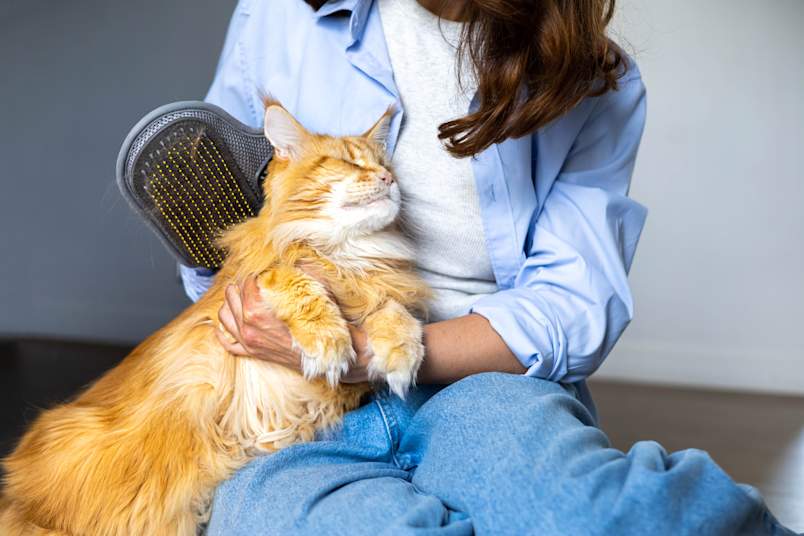
Large cat breeds may not need different care than other cats, but they often need more of it. Before bringing one home, make sure you’re prepared for:
More food: Bigger bodies need more food, which can increase your monthly budget.
Bigger gear: Look for roomy litter boxes, sturdy cat trees, scratching posts, carriers, and beds designed to support larger cats.
More enrichment: Many large breeds are intelligent, athletic, and happiest when they have opportunities to climb, explore, and play every day.
More preventive care: Keeping your cat at a healthy weight and scheduling regular veterinary checkups can help reduce the risk of obesity and other health problems.
Feeding a Big Cat Breed
Big cats need more calories than the average house cat, but more food doesn’t always mean better nutrition. Choose a complete and balanced diet that’s appropriate for your cat’s age, activity level, and health needs. Keeping your cat at a healthy weight is one of the best ways to support their joints, heart, and overall health.
Some large kittens mature more slowly than many other breeds and may benefit from kitten food for longer than the average cat. Always ask your veterinarian when it’s appropriate to transition to adult food.
Medical Issues Common in Large Cat Breeds
From aching joints to inherited heart disease, some health conditions are more common in large cat breeds.
Joint and Mobility Problems
A larger body puts more stress on a cat’s joints, making some big breeds more susceptible to arthritis and other mobility issues as they age. Maintaining a healthy weight, providing low-impact exercise, and scheduling regular veterinary checkups can help keep your cat moving comfortably.
Heart and Respiratory Concerns
Some large cat breeds, including the Maine Coon and Ragdoll, are more likely to develop hypertrophic cardiomyopathy (HCM), the most common form of heart disease in cats. Routine veterinary care and early screening can help identify heart problems before symptoms appear.
Obesity and Weight-Related Risks
Carrying extra weight can increase the risk of arthritis, diabetes, and other health problems, especially in larger cats. Measuring meals, encouraging daily play, and keeping up with routine veterinary visits can help your cat maintain a healthy weight throughout its life.
Does Pet Insurance Cover Large Cat Breeds?
Big cats can come with big personalities…and sometimes big vet bills. Fortunately, cat insurance can help cover eligible accidents and illnesses, while an optional wellness plan can be added to help make routine care more predictable. That way, you can focus on enjoying your larger-than-life companion instead of worrying about the cost of caring for them.
Ready to Bring Home a Big Cat?
Whether you’re drawn to the towering Savannah, the gentle Maine Coon, or the water-loving Turkish Van, the best large cat breed is the one that fits your lifestyle. After all, when it comes to cats, a little extra oomph can go a long way.